Wednesday, May 9, 2012

Quad Rock 25 Pre-Race Thoughts

The Quad Rock 25 will be a new race for me (and for everyone else running it) so I don't really know what to expect. It's kind of refreshing to be running something new with no past splits to obsess over.

Given the course's impressive amount of vertical (5,500 ft of climbing) it will probably fall somewhere between the Salida marathon and the Leadville marathon in terms of difficulty-- probably closer to Salida.

QR25 vs. CPTR (4:34)
  • QR25 is 2,500 ft lower in elevation.
  • QR25 has 2,000 ft more elevation gain.
  • I'm in approximately the same shape as late April.

QR25 vs. Salida (5:34)
  • QR25 is 1.2 miles shorter.
  • QR25 is 2,000 ft lower in elevation.
  • QR25 has 1,000 ft more elevation gain.
  • QR25 will be snow free!
  • I'm in much better shape now than in early March.

QR25 vs. Leadville (5:49)
  • QR25 is 1.2 miles shorter.
  • QR25 is 5,000 ft lower in elevation.
  • QR25 has 500 ft less elevation gain.
  • QR25 has gotta have fewer rocks than Mosquito Pass.
  • I'm probably not in better shape now than I typically am in early July.
So... I don't know. I'd be thrilled with a 4:59 finish, but I think that's a little optimistic. More realistic would be something like 5:10ish. The big unknown for me is how much the lower elevation will cancel out the extra climbing. The lower elevation has gotta count for something-- the race is 5,000 ft lower than my average training run!-- but climbing is climbing. It's always tough and the QR25 has plenty of it. Another X factor would be the potential heat in Ft. Collins, but the weather actually looks perfect for Saturday's race-- a relatively cool 65F. I'm not tapering for the race, but the only race I do taper for is the 100, so that shouldn't really be a factor when comparing times.

My strategy will be what it pretty much always is:
  • Start slow and steady.
  • Focus on nutrition and hydration. Eat! Drink!
  • Power hike the steep uphills. Run the downhills.
  • Have fun!
  • Try to finish strong.
Most of the racers are actually running the 50 mile version (doing two loops) so I should have plenty of company on the course (since they'll be pacing themselves for a ~10 hour run).


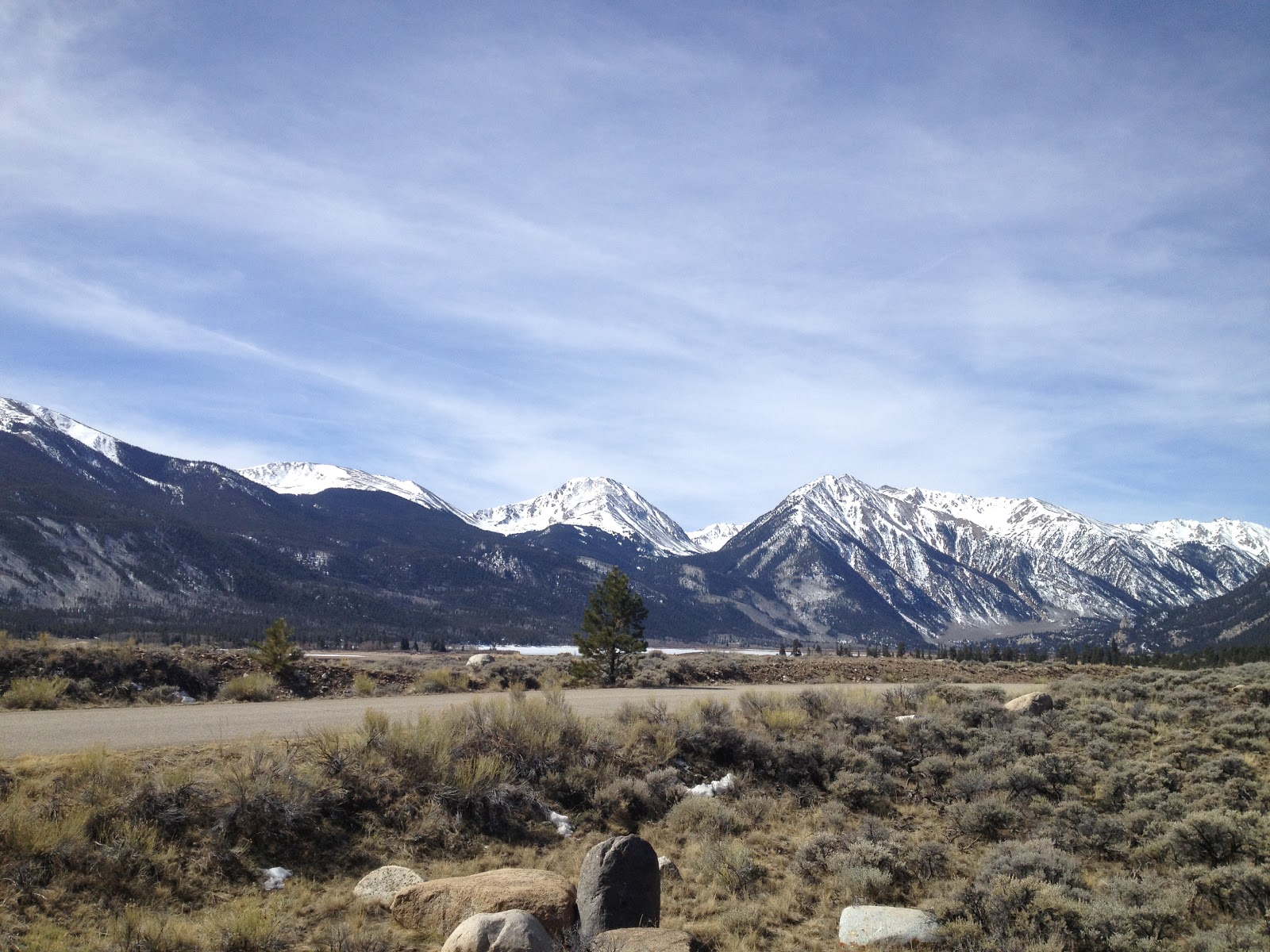
The trail around Twin Lakes is totally melted out.

I've gotten in some solid training since CPTR two weeks ago. I enjoyed a beautiful 20 mile run around Twin Lakes last Friday-- completely snow free! The heat and sun definitely crept up on me and I became seriously dehydrated just before the epic 2,000 ft climb up to Lily Ponds at mile 14. It was a grind, but a good opportunity to practice my power hike. I finished the run weighing 5 lbs less than my starting weight-- not good. Every year it seems I need a reminder to drink, dammit! I try to consume 20 oz of water an hour, but sometimes I get lazy and pay the price. I find that each long training run has a lesson to teach you-- though it may not be the lesson you expected.

They've also replaced the footbridge on the west side of Twin Lakes. (It was washed out last year.)

A view of Hope Pass from Lily Ponds. I bet the CT from Twin to Halfmoon is runnable!


Wednesday, May 2, 2012

Month in Review (April)

4/2010: 163.3 miles
4/2011: 135.0 miles
4/2012: 164.9 miles

On Sunday and Monday (the last two days of April) I managed to run two recovery runs to bring my monthly mileage total just barely above my previous record for April. It was a small triumph to return from my injury-enforced reduced mileage fast enough to be able to log that many miles in April. That makes 10 consecutive months where I've set personal records for total mileage run.

The Boulders Trail, Iowa Gulch, Leadville.

More than any other month I can think of, April was a roller coaster of emotional highs and lows. When my ITBS struck it was like someone pulled the rug out from under my feet. I lost my balance, everything was up in the air. Could I recover in time for CPTR? For any of the races I had planned for May? For the San Juan Solstice in June? To be able to bounce back as quickly as a I did and set a PR at Collegiate Peaks seems almost miraculous. As elated as I am, I'm still jittery about my knees. Is my ITBS truly behind me or will it surface again as my mileage increases? I will continue to stretch, massage, and strengthen and hope for the best.

My last six weeks of training have looked like this:

3/19: 37 miles
3/26: 18 miles (injured)
4/02: 20 miles (injured)
4/09: 50 miles
4/16: 42 miles
4/23: 43 miles

Even though I have several different training plans sitting on my desk, I'm not really following any particular one. I'm not sure exactly why (fear of commitment?), but I guess I'm trying to run more by feel this year-- adjusting my training schedule to fit the race schedule I've signed up for. My training logs from the previous two years form the foundation of my training. I know what kind of results they produced, so they're an invaluable benchmark.

As complicated as training schedules can get, here's my basic high level plan for this year:

Jan: 25 miles/week
Feb: 30 miles/week
Mar: 35 miles/week
Apr: 40 miles/week
May: 45 miles/week
Jun: 50 miles/week
Jul: 55 miles/week
Aug: taper and race!

Of course, nothing is set in stone and there are always weekly variations from the average, but I think these high level per week averages are a good guideline for me to train by. Their beauty is their simplicity: weekly mileage just increases 5 miles/week/month.

May is when the hammer drops. I consider May, June, and July to be peak training time. Every year, Collegiate Peaks ushers in a new phase of training for the 100. This year I've got the Quad Rock 25 in two weeks and the Sage Burner 50K two weeks after that! So my week-by-week schedule for the end of April and the rest of May looks like: race, train, race, train, race. (That pretty much sums up the life of an ultra runner.)

The mileage to beat for May is 238.4 (set in 2010). That's my all time monthly high. I don't think I'm likely to top it this month-- nor am I sure it's smart to even try. Training is more than just mileage. Probably my most important goal this month is to run one 20+ mile run every week and follow it up with a 5-10 mile recovery run the day after. Sure, I could pad my mileage by sprinkling a ton of 5-7 mile runs throughout the week, but the long run is the key.

The plan is for May is ~20 miles Tue/Wed/Thu and ~30 miles Sat/Sun. Stay vigilant about ITBS: continue to stretch, foam roll, and strengthen. Eat lots of protein. Drink lots of Recoverite.

Simple.

Clown shoe power!

Tuesday, May 1, 2012

Collegiate Peaks Race Report

This year's CPTR went almost perfectly. I finished in 4:34-- almost exactly the time I was aiming for and a 17 minute PR over my previous best time in 2010. My pacing went pretty much exactly as planned-- run the first 18 miles slow and steady, focusing on nutrition, and then finish strong, taking advantage of the downhills.

Here's a split comparison to last year with the form: mileage/2011 time/2012 time/difference.

02.92 miles/00:26/00:26/-00:00
05.92 miles/01:02/01:01/-00:01
11.57 miles/02:07/02:06/-00:01
14.47 miles/02:37/02:40/+00:03
17.87 miles/03:30/03:25/-00:05
21.70 miles/04:13/04:03/-00:10
24.94 miles/04:53/04:34/-00:19

I had my splits from the previous year memorized and my main goal was to reach the top of the hill by 3:30. From there, I wanted to average low 9 min/miles to the finish. I ended up climbing the hill 8 minutes faster than last year and arrived 5 minutes ahead of my goal. I didn't quite average low 9 min/miles for the rest of the race, but I came damn close. (I blame the energy sucking head wind during the last few miles!) I don't think anyone passed me during the last 7 miles and I managed to reel a bunch of people in. Finishing strong is such a huge psychological boost-- especially when your ultimate goal is to finish a race that 4x as long as the one you're currently racing!

This year's CPTR represents my biggest percentage improvement in a race (6%). It's such a great feeling to see all your training and preparation pay off. A giant grin was plastered on my face for the rest of the day.

PR!

A collection of random race thoughts:
  • I ate a little over 900 calories during the race (plus 200 calories at the starting line, plus 750 calories for breakfast). That's a little over 200 calories/hour during the race-- barely enough. I skimped on calories during the last leg since I had nothing easy left to eat (i.e., gel) and I really wanted to keep moving. From mile 6-18 I almost always had something in my mouth, dissolving between my teeth and cheek. It took me about a hour to eat a single Honey Stinger Waffle! Most of my calories came from a flask of Hammer gel. I also nibbled on a homemade rice/egg/bacon/cashew bar, which was a welcome change from the other sweet foods I was eating. (I highly recommend The Feed Zone Cookbook.)
  • In past races, I've normally consumed calories in little "bursts" every 30 minutes, so this race was a little different. I found myself taking lots of smaller bites of food more frequently. I never stopped eating for a significant amount of time-- it was more of a slow, steady drip of calories. I think this worked well for me since I have an incredibly sensitive gag reflex when I'm running.
  • A deep cough around the second aid station turned into a bout of nausea that I fought off for approximately 5 minutes. I was sure that I was going to puke, but I managed to keep everything down. I had to walk for almost half a mile though, and I lost some time during that leg-- running it 3 minutes slower than last year. Who gets nauseated only 11.5 miles into a race? I'm special like that.
  • I took nothing from the aid stations except water. There really wasn't anything appealing. I expected that and I was carrying all the food I needed.
  • After the first aid station (around mile 6) I was almost always feeling slightly hungry. It was never a problem, but it's amazing to me how many calories I seem to have to eat to stave off hunger while running. It probably doesn't help that I'm 6'5" and 185 lbs.
  • How much did my new Hoka One One Mafate 2's help? I keep asking myself that question. I've been running in them now for 3 weeks. What can I say? They feel very,very different than the minimalist running shoes I was running in before (New Balance MT110's). Running downhill is certainly much more comfortable. And the key for slower runners like myself at ultra distances is to generally walk the steep uphills while conserving energy to run the downhills/flats. So shoes optimized for downhill performance make sense. Another important piece of advice for ultrarunning is to focus your efforts on improving your low points during a race. In other words, don't worry about running the first 50 miles 10 minutes faster, work on running the second 50 miles 90 minutes faster! The Hoka  One Ones seem well designed for that. They still seem gimmicky to me, and I prefer the "romance" of minimalist shoes, but it's hard to argue with results...
  • No IT band pain! Hooray! This was a huge boost in confidence. Disciplined stretching, foam rolling, hip strengthening, and knee icing pays off!


Friday, April 27, 2012

Collegiate Peaks Pre-Race Thoughts


My ITBS has made April a challenging month. I had to be careful to take it relatively easy while slowly building confidence in my knees. I am a creature of habit and I do not adapt to changes in my routine easily. But my rehabilitation required that I stretch my IT band 2 times a day, foam roll it after every run, ice my knees after every run, and perform hip strengthening leg lifts at least once a day.

The good news is that it appears to be working. All my effort seems to be paying off. After being able to run several 7-13 mile runs early in the month without any pain, I tentatively ran two 20 mile runs during the last two weeks. I ran in my new Hokas and stopped to stretch every 4 miles or so. Once or twice I felt some tightness or a brief tweak of pain, but all-in-all the runs went very smoothly. In fact, I was able to set a 20 minute PR on my 20 mile run on the road to Winfield (not counting the time I spent stretching).

I've never been able to "beat" ITBS without taking a ton of time off from running, so I'm psyched that I only had to reduce my running mileage for 2 weeks. Hooray!

On Wheeler's Way, a typical midweek training run in Leadville.

The CPTR (the 25 mile version) was the first race I'd ever run back in '10, and the following year it was the first race I'd ever run twice. I really wanted to set a PR in '11, but I didn't. I went out fast on the flats to try to put some time in the bank. I felt a bit sluggish on the uphills. Due to mediocre hydration and nutrition, I started feeling hungry around mile 18 or so. I walked most of the final uphill. I probably wasn't properly hydrated (I was getting a little sick of the HEAVE, er... HEED I picked up at the aid stations). I staggered to the finish, in contrast to '10 when I felt the final leg was my strongest leg. I ran it only 5 minutes slower, but I felt much worse. Expectations play a big role in how you judge your finish and finishing strong always feels good-- no matter what your time is.

I must confess that I am excited about the opportunity for a PR this year. Too excited, probably. It's best to approach these races as supported group training runs. Do not taper. Take it nice and easy. Test out gear, food, and pacing strategies that you plan to employ in your focus 100-mile race later in the season. Finish the race feeling like you could turn around and run it again-- or, you know, 3 more times!

My plan is to take a hybrid approach this year. For the first 18 miles I'll try to relax and focus on proper form and consuming adequate quantities of food and water. I'll walk the steep uphills. I'll probably stop and stretch 1 or 2 times. I want to arrive at the top of the hill at mile 18 feeling (relatively) fresh. Then, from mile 18-25 I'll race, hopefully finishing strong on the highly runnable final downhill miles. Maybe I'll even reel a few folks in, which is always motivating.

Here are my splits from last year:

02.92 miles/00:26/09:00 min/mile/+121 ft
05.92 miles/01:02/11:48 min/mile/+506 ft
11.57 miles/02:07/11:32 min/mile/+457 ft
14.47 miles/02:37/10:17 min/mile/-571 ft
17.87 miles/03:30/15:34 min/mile/+862 ft
21.70 miles/04:13/11:17 min/mile/-883 ft
24.94 miles/04:53/12:26 min/mile/-494 ft

Up until mile 12, things were going pretty much as planned, but then I started fading. I should've been able to run the downhill to the aid station at mile 14.5 a bit faster. I should've been able to climb to the aid station at mile 18 a bit faster. And I definitely should've been able to run the last 7 miles much faster.

Simply put, the goal for this year is to be able to run miles 22-24 at the same pace as I run miles 1-3. (Mile 25 is on fairly technical terrain, so it's not really comparable to mile 1.)

We'll see... I am just happy to be able to race this race at all. Period. Four weeks ago, I feared CPTR '12 would be my first DNS. Any finishing time is better than a three letter acronym!

On the CPTR course, around mile 13.

Monday, April 2, 2012

Month in Review (March)

3/2010: 107.0 miles
3/2011: 129.6 miles
3/2012: 153.3 miles

Most of March felt like April (or even May!) up here in Leadville-- abundant sunshine, temperatures in the 50s, and plenty of melting snow. Even though the local trails are still mostly snowbound, March was full of inspiring running weather. While I did make it down to Buena Vista/Salida/Twin Lakes a few times to run on some nice dirt trails (generally for my longer runs) I spent most of my time on the paved roads around town. I've noticed that around this time of year is when I end up logging most of my miles on pavement. During the winter, everything's snowbound so you might as well run on snowy trails. But during the spring there are a few weeks when the trails are still snowy and the dirt roads are too muddy, but the paved roads beckon with their smooth, dry surfaces. After a few weeks of sun, the dirt roads dry out and become the best option, and asphalt is abandoned until the following spring. This March we've gotten so much sun and consistently warm weather that even some of the south-facing, thinly-treed trails are starting to melt out!

At the beginning of March I set for myself the modest goal of running 150+ miles this month. While I expressed some skepticism that it would be possible to top February's miles, I managed to do so. It was a record March for me both in terms of total mileage and also in terms of the length of my longest long run (26.2 miles). So I should be pretty satisfied, right? Well... sort of...

Instead of entering April with confidence, I'm entering it with ITBS (Iliotibial Band Syndrome). I felt a little IT band pain during the last few miles of the Salida Marathon on 3/10. Nothing too debilitating, but noteworthy. For the next 13 days it never resurfaced-- though I certainly had other aches and pains leftover from the race. Then, I went for my next long run on 3/23-- a beautiful 16 mile run along the Midland Trail in Buena Vista. I felt pretty strong and set a PR for the route despite taking it easy during the first few miles. However, again, during the last mile or so of the run I started feeling IT band pain in my right knee. After a day off, I went for a run along the north side of Twin Lakes. I parked at the South Elbert Trailhead and headed south on the Colorado Trail. This run begins with a 300 ft drop in the first mile. My IT band pain started almost immediately. At first it was dull, but it got worse and worse as the run progressed. Eventually I had to phone my wife and cut short the run at 10 miles. There was no denying it any longer. ITBS was back. And I was pissed.

A View of Mt. Hope (and Hope Pass) from the Colorado Trail near Twin Lakes

I battled through ITBS in my left knee in 2010. It surfaced in mid July during the Silver Rush 50 miler (around mile 29). It was my final big training run before my first Leadville 100 (which was about a month away). I had never heard of ITBS before and I didn't even know what an IT band was! After a bit of research, I scheduled a visit to a physical therapist my friend recommended down in the Vail area. I do not seek out medical attention very willingly. But after almost 8 months of training I wasn't going to risk anything when it came to successfully completing the 100! I was scared enough to actually visit a doctor. They tried everything: stretching, massage, foam roller, Granston technique, active release technique, cold laser therapy, electrical stimulation, and plenty of KT tape. I went to two sessions a week with my final session being two days before the 100.

It didn't work.

My IT band flared up at about mile 22 and I pretty much limped for the rest of the race-- especially downhill. Yes, I finished, but I was definitely humbled by my injury. After the 100 I didn't run a single step for 4 months.

My training the following year was more balanced and ITBS never reared its ugly head again. I ran my second Leadville 100 without taking a single painkiller. I thought I was done with ITBS. Sadly, this March proved me wrong.

In retrospect, I can't really blame the therapist for his treatment in 2010. I didn't do my part. While I borrowed a friend's foam roller and used it a few times, my twice weekly office visits served as an excuse to not do anything myself at home. I should have been stretching my IT band 2-3 times a day and hitting it with the foam roller as often as possible. I should have been doing side leg lifts to try to strengthen my hip muscles. I should have been icing my knee. Instead I thought professional therapy and cutting back on my mileage was sufficient.

Today was the first time I've run in a week. I was ecstatic to run a cautious 4.4 miles totally pain free! I spent the previous seven days resting and stretching. I hate stretching. I am the most unlimber person in the world. I can't even touch my toes-- not even close.

But, I hate not running even more than I hate stretching.

So, maybe-- maybe-- I'm on the road to recovery. I'll take things easy this week. My family and I are headed out for a spring camping trip to Utah. (April trips to Utah are crucial to surviving Leadville's winters.) I'm super excited about the trip, but I'll have to reign in my plans of running big miles in Canyonlands National Park. Maybe I'll try a 13 miler... maybe...

That's what a running injury does. It suddenly fills your nice, neat training schedule full of "maybes". Certainty is lost. Plans are revised. Everything becomes contingent. It's hard not to succumb to anger and despair. You don't realize how lucky you are when you're healthy. ITBS is especially sneaky. I feel totally fine when I'm not running. I even feel fine for the first few miles. But then suddenly-- out of nowhere-- it strikes, and I'm immediately limping.

The mileage to beat for April is 165 miles. My next race is the Collegiate Peaks 25 miler on 4/28. Given that I plan on drastically reducing my mileage for at least the next week (and then only slowly ramping it up), I don't think I'll be setting any records this month. That's okay. If I can recover enough to run well at the CPTR I'll be very happy. Perhaps I'll even emerge from this injury a stronger, more disciplined runner.

For what it's worth, here's my guide to recovering from ITBS. I'm certainly no expert. This information is taken mostly from the Lore of Running, miscellaneous sources scattered around the Internet, and my own personal experience.

  • Performing IT band specific stretches is the most important thing you can do. Stretch often. 2-3 times a day. You should feel it in your hips and buttocks. If you do nothing else: stretch.
  • Use a foam roller 2-3 times a day. It will hurt. A lot. Always follow foam rolling with stretching.
  • Ice your knee 2-3 times a day to reduce inflammation.
  • Strengthening your hip muscles with daily sets of side leg lifts might help in the long term, though the research seems somewhat mixed. It probably can't hurt. Stretching is more important, though.
  • Pay attention to early signs of ITBS-- especially at the end of long runs! Do not ignore it!
  • Dial back your mileage immediately. You probably shouldn't run for at least a week. Cross training might be okay. Biking seems to work for me. Try to avoid runs with big downhills. Try to run on trails-- not pavement. Uneven terrain might actually be better than totally smooth (and highly repetitive) terrain. Speed doesn't seem to matter. Running faster might even be better (i.e., running with more "toe off"). Don't get so tired that your form breaks down, though. That might have been what caused the injury to begin with.
  • Consider taking NSAIDs to reduce inflammation in your knee (not to dull the pain).
  • ITBS is treatable. Everything I've read says you can generally expect a full recovery in a month or so. We'll see...
  • Plan on continuing to stretch and roll your IT band preventatively even after you've recovered from your initial injury. Ice after long runs is probably a good idea.
  • I've read that ITBS is a sign of not enough cushioning in your shoes. (Maybe because you have high arches like me.) I've also read it's a sign that you should switch to minimalist shoes. I'm not sure what to believe. I've always run in minimalist shoes (New Balance MT100s, MT101s, and MT110s), but I'm somewhat embarrassed to say that this latest episode of ITBS has finally motivated me to order a pair of Hokas to experiment with. (They actually make them in my size now.)
  • I can't really say I've had much success with those straps that are supposed to stabilize your IT band. Nor have I felt much difference running with KT tape on my knee. I doubt they hurt, and maybe they even help a little, but they're definitely not a real solution.


Sunday, March 11, 2012

Salida Marathon Report

I didn't quite know what to expect going into this race. Most of the course was new to me since I had only run the half marathon last year. More importantly, however, was the fact that I hadn't gone on a run of more than 13.5 miles since October 1st. (That was over 5 months ago!) If you take a look at any marathon training plan I'm pretty sure it won't say "Run 100 miles. Spend 5 weeks running 20 miles a week. Run 50 miles. Spend 5 months running about 25 miles/week. Do not taper. Run a marathon. With almost 5,000 ft of vertical. In the snow."

I did have a 55 mile week of running about 4 weeks ago. I was hoping those back-to-back runs gave me a bit of stamina. And 2 weeks ago I managed to run 9,000+ ft of vertical in a week, which was probably too close to the race to help too much and, in fact, might have led to some lingering soreness in my legs. But I knew the Salida marathon would have a fair amount of vertical-- 4,793 ft according to my GPS-- and I wanted some practice.

Whatever. Excuses, excuses. This race was about training. It was about forcing me to run longer than I ever have this early in the season. It was about pushing myself. And pushed I was!

My pre-race rituals the morning of the race were strangely comforting-- almost nostalgic. I know it sounds silly, but applying BlodyGlide can be an emotional experience! Filling up my flasks with gel, stuffing my pockets with salt tablets, putting on my running vest... All these activities brought a smile to my face and evoked memories of past races. Even though I knew the next 5 hours were going to be tough, I was excited to be at the starting line. The weather was beautiful and provided reassurance that maybe winter in Leadville might actually end sometime in the next couple of months.


What can I say? Unsurprisingly the first 13.1 miles of the race went beautifully. I was definitely in shape to run a strong half marathon. Too bad that wasn't the race I had entered! I was especially proud to be able to run a stretch of ~3 miles with 500 ft of elevation gain per mile. I was passing people, slowly reeling them in, as we ascended to the halfway point of the race. I joked that if there's one thing that running in Leadville teaches you it's how to grind up a high-elevation dirt road at a 12:30 minute/mile pace! Nutrition was going well. I was able to eat a fairly big breakfast despite my usual pre-race jitters, and I was eating gels regularly and drinking Nuun and Gatorade for electrolytes. Throughout the entire race I felt my aid station management was perfect-- I was always in and out in less than 30 seconds. Shortly after the turnaround we hit the snow and mud. I knew there would be some of this, but I was caught off guard by how much-- at least 7 miles, by my calculations. It would've been easier if the snow had been more consistent and packed, but it was a slushy, muddy mess. It just sucked the energy out of me. A few folks started passing me. Reviewing my GPS data after the race, I actually managed to maintain a relatively good pace despite the conditions up until about mile 18, but then I had no energy left for the downhills. Miles 18-24 were the low point. Many folks passed me in this section. I had run this section the year before during the half marathon and I knew it wouldn't be easy this late in the race. More snow, more mud, and the terrain is pretty technical at times-- lots of rocks and sections that are too steep to run safely. I was slogging through it as best I could, but it wasn't pretty. No serious pain, though. The hamstrings were tight, but I expected that. I felt a tiny bit of IT band pain, but nothing serious. I was a little hungry at times, but I fought it off with more gel. No, I was just tired. This was way longer than I had run in a long, long time. The scenery was beautiful and my mental state never got too low, but I was certainly shaking my head and wondering where all my energy went. It's pretty humbling when you lose the ability to run the flats and gentle uphills and even your downhill pace is only a minute/mile faster than you ran the same section uphill 24 some odd miles earlier!

The finish line was a welcome sight. 5 hours and 34 minutes. Wow. I was hoping for 5 hours. Ah, well. So it goes. I can't say I'm too disappointed. I figure the snow/slush/mud maybe slowed me about 13 minutes. And the rest was due to overly optimistic expectations on my part. It was great to see my wife and daughter at the finish line. I basked in the exhausted post race glow for a while and then climbed back into the car for the hour long drive up to our snowy home. It felt very satisfying to enter a 26.24 mile run into my training spreadsheet. (They get their own special background color to highlight them. Yes, I'm a geek). I'll probably only get the chance to run 10 or so runs of that distance or more during the summer. It feels great to have one under my belt already. Only seven weeks until the Collegiate Peaks 25-miler!

Sunday, March 4, 2012

Month in Review (February)

2/2010: 100.9 miles
2/2011: 111.3 miles
2/2012: 151.9 miles

I just got back from a week long business trip to Boston, where I wrapped up my training for the month of February slogging away on a treadmill at a 10% grade. How do I feel? Pretty good, I guess. I'm not following any strict training plan, but I am definitely trying to hit weekly mileage goals and I'm constantly comparing my training to last year's. It's still way too early in the year for me to get too disappointed about missing a scheduled run or not quite getting in enough miles per week. That said, I logged 40 more miles this February than last February. I also managed to run 5 10+ mile runs this month vs. 2 10+ mile runs last year. I'm also running my usual 5 mile run (the boulevard) about 5 minutes faster than I did at this time last year. So, that's reassuring and certainly evidence that there's a benefit to regular running throughout the year even if the weekly mileage hovers around only 20-25 miles a week.

However, I wanted to get in one 20 mile run in February, but that never happened. And, of course, 2012 is a leap year so I got to pad my monthly mileage by one extra day. Also, some of those miles weren't technically running miles. In January and February I usually spend a hour on the bike trainer 1-2 times a week instead of running. It depends mostly on the weather, my schedule, and my general motivation level. I count one hour on the bike trainer as a 5-mile run. This year I have a cadence sensor mounted on my bike so that my GPS can measure the distance I ride on the trainer. That has kept me honest and I can better judge how much effort I put in during my hour long ride. Last year I would just wing it and it's pretty easy to space out and slow down without noticing it (especially while watching a movie). I used the bike trainer in 2011 as well. I feel it's a great option to have while training during Leadville's winters. Peddling away on the bike trainer in a t-shirt and shorts next to the warmth of the wood stove-- while watching the windblown snow whip around outside the house-- definitely has its appeal. 

I would say that February is the toughest month to train in Leadville-- at least mentally. Your "serious" training probably started in January, but by February your initial enthusiasm has probably waned a bit and the novelty of running in winter is gone. You just have to grind it out and get your miles in. Should I wear my screw-studded shoes, my micro-spikes, or my snowshoes today? Glancing at the weather conditions before your run is usually disheartening: often temperatures drop into the single digits-- especially with windchill factored in. Running at dawn is brutally cold. In March, conditions aren't that much different, but you do get a few days where you get a little taste of spring. On March weekends, trips down the Arkansas valley to BV (where it can be 20 degrees warmer and snow free) make things more palatable-- even inspiring. Even the roads in Leadville start to melt out a little bit by the end of March, and running on asphalt and dirt (instead of snow and ice) suddenly drops your times by almost a minute a mile, making you feel like a rock star.

California Gulch, Leadville

In a way, my February training almost went too well. It'll be a challenge for me to log 150 miles in March. A week long vacation in Florida and a week long business trip to Boston gave me plenty of time to run in February. In March... I've got the Salida marathon as an excuse to log 26.2 miles and then there's my birthday-- which I generally take off to do a long run down in BV. (Is it lame to consider a 20-mile run a birthday present to yourself?) March miles won't magically happen. I'll have to be diligent and run regularly throughout the week and get at least one 10+ mile run in per week. No more two days off in a row.

Again, the emphasis for my 2012 training is the long/back-to-back run. If I get those in-- even if my total mileage isn't more than February-- I'll be happy.